Specifications
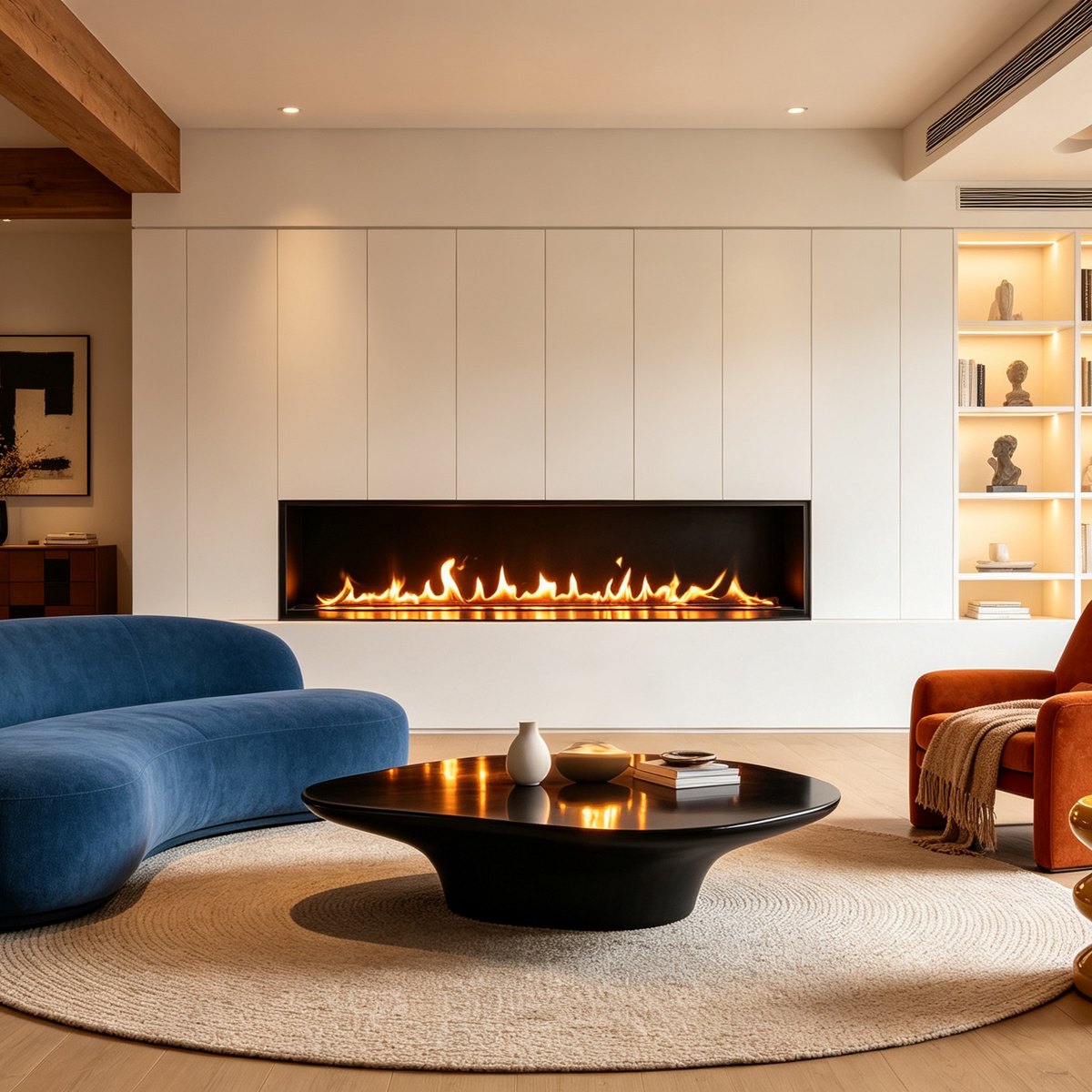
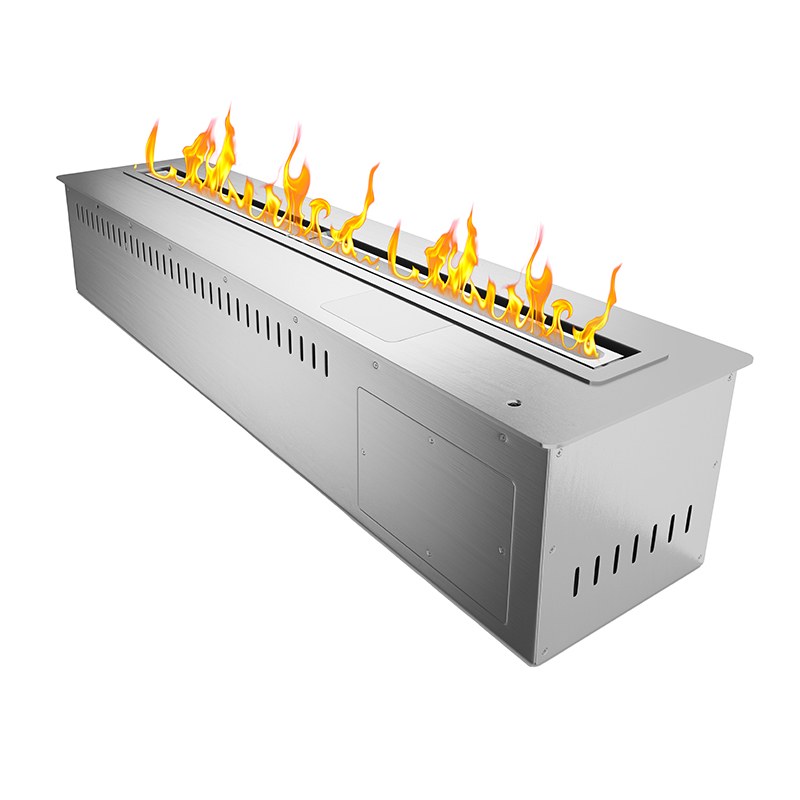
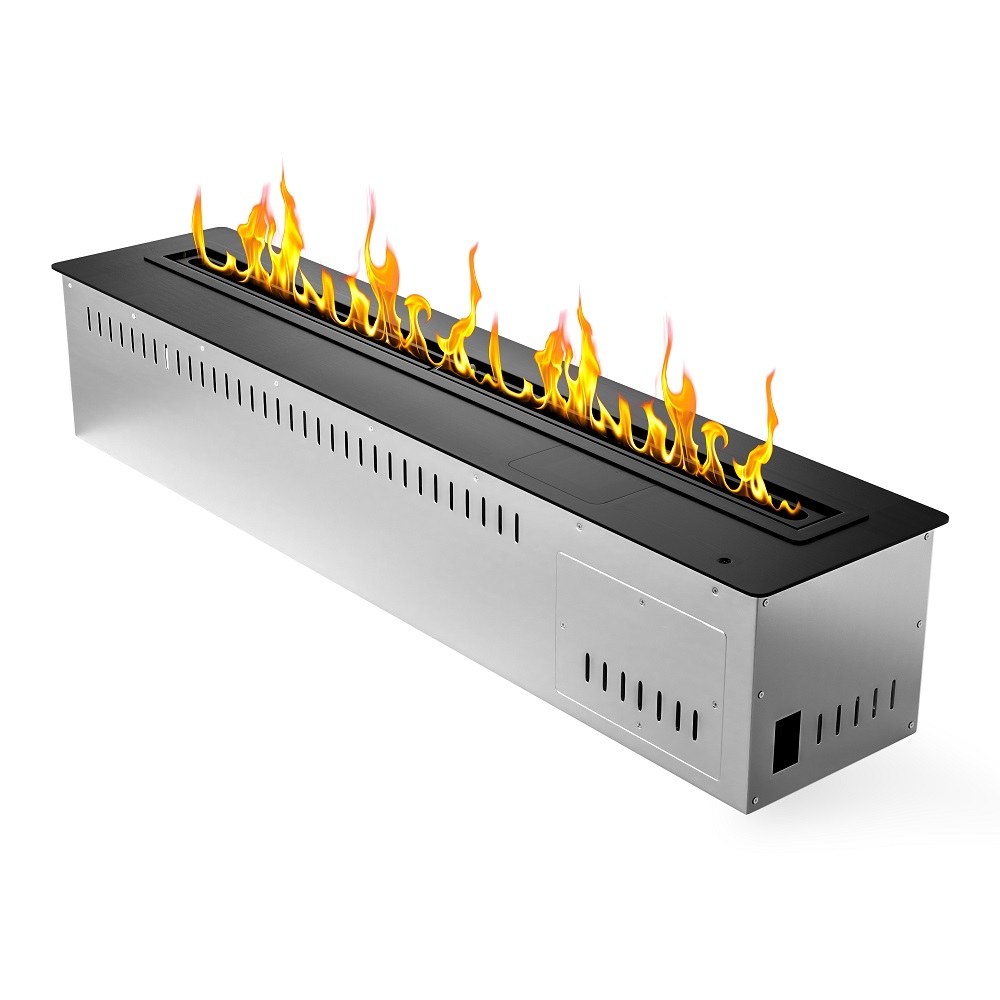
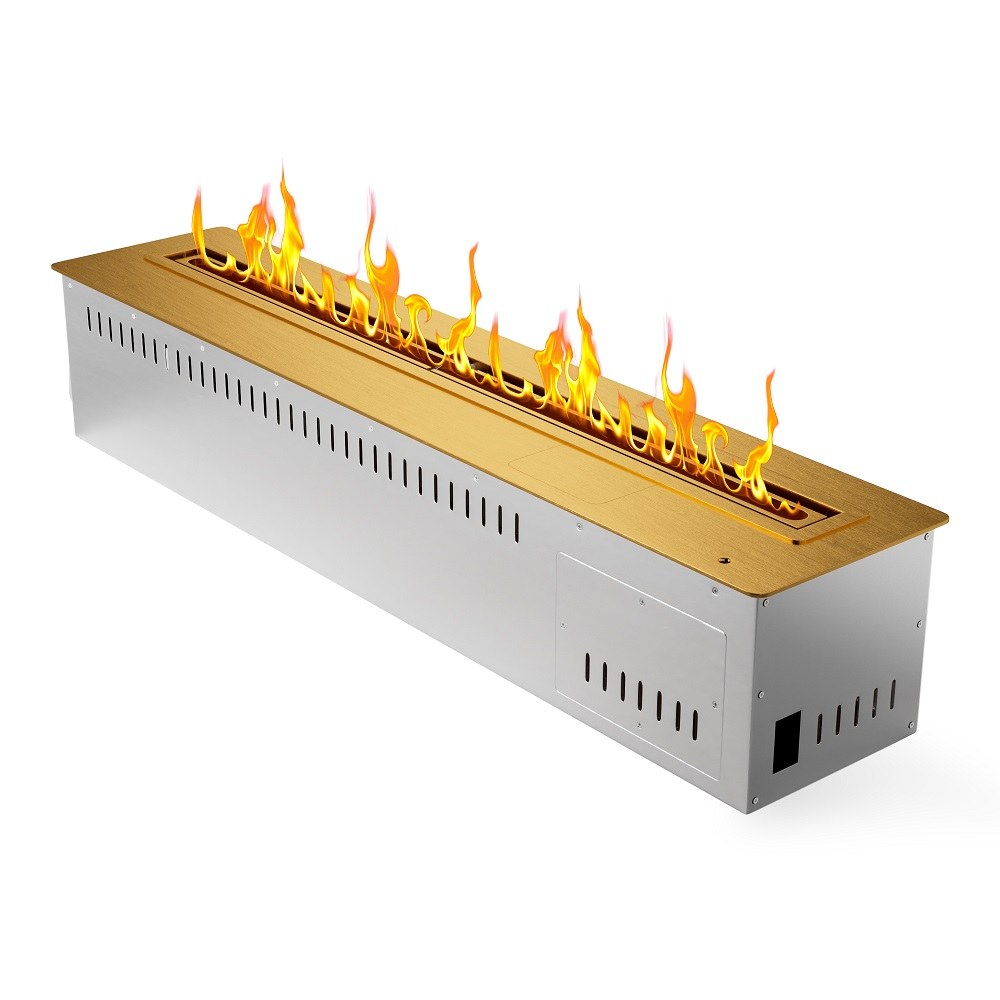
One 1220 mm chamber — the 48-inch model in our bioethanol fire inserts range — sized for a wall cavity. It runs on liquid ethanol with an automatic feed: the fire is lit, fed and shut down electronically, so the flame holds its height from the first minute to the last, with no manual topping up, no smoke and no ash. Cut in SS304 to fit the opening on your drawing, it is what makes a modern ethanol fireplace possible without a flue.
Technical data
- Material
- SS304 stainless steel
- Flame size
- 1102 mm L
- Unit dimension
- 1220 L × 193 W × 168 H mm
- Fuel capacity
- 10.3 L
- Approx. burn time
- 5.8–12.5 hours
- Heat output, net
- 11,567 W / 39,464 BTU
- Minimum room
- 95–115 m²
- Weight
- 34 kg gross · 21 kg net
- Voltage
- 110–240 V
- Application
- Indoor use only
- Certification
- CE · UL 1370 (OTL)
Certification
Two independent programmes sit behind every burner — an EU EMC test report for CE, and an OTL certification to UL 1370 for unvented alcohol-burning decorative appliances. Both documents are downloadable below.
CEEuropean Union — EMC Directive 2014/30/EU
- Harmonised standards
- EN IEC 55014-1:2021EN IEC 55014-2:2021EN IEC 61000-3-2:2019 +A1:2021EN 61000-3-3:2013 +A1:2019 +A2:2021 +AC:2022
- Testing laboratory
- Kiwa Gastec (China) Ltd, Guangzhou — IAS accredited
- Report number
- 705358-002
- Date of issue
- 3 December 2024
UL 1370North America — OTL certification
- Standard
- UL 1370 — unvented alcohol fuel burning decorative appliances
- Certification body
- OMNI-Test Laboratories, Inc., Portland, Oregon, USA — ISO/IEC 17067 System 5
- Report / project no.
- 0590AF001S · QC file 0590-QC01-2026
- Date of issue
- 8 June 2026
- Result
- Final inspection passed — no findings discovered
The CE report covers the full ILFP-SR18 to ILFP-SR96 range — the models are identical apart from fuel capacity. Certificates, declarations of conformity and test summaries for a specific project are available on request.
Installation & clearance
The burner drops into a cut opening in a non-combustible surround — no chimney and no flue. A standard three-prong grounded 110/240 V outlet must sit inside the wall cavity, within reach of the burner's lead.
This chamber is specified for indoor use only. If the brief calls for outdoor built in fireplaces — a terrace wall or a covered loggia — say so at the enquiry stage: the chamber, the sealing and the finish are specified differently, and the same drawings are re-issued for it.
ClearanceAbove the fireplace: 500–600 mm (19-11/16″ – 23-5/8″)
Cut openingA 183 · B 1210 · C 250 mm (7-1/5″ · 47-3/5″ · 9-4/5″)
Wall cavityA 383 · B 1410 · C 508 mm (15″ · 55-1/2″ · 20″)
SurroundNon-combustible board, stone or metal; keep the clearances on the drawing
Warranty & compliance
We provide a 5-year limited warranty on our smart ethanol fireplace products, covering all digital and mechanical components required for the correct and safe performance of the unit.
Where the diagnosis confirms a defect in materials or workmanship, we provide the required replacement part(s) free of charge, including shipping cost, for the duration of the warranty period.
Easy to control.
Clean by design.
Everything is built into the chamber — a pump, a level sensor and an ignition coil. Fit the suction hose into a can of bioethanol and the ethanol burner fills itself; two presses on the power button light it; the handset, the buttons on the unit, the app or a wall switch then hold the flame at one of five levels. No funnel, no lighter, no gauge to watch, and nothing you have to keep adjusting — which is what a bioethanol fire indoor installation should feel like.
It is real ethanol vapour, not an LED effect — the flame moves, reflects in the brushed steel and runs for 5.8–12.5 hours on a tank. And it burns clean: water vapour and a trace of CO₂, no smoke, no soot, no smell, no chimney to sweep. One press closes the fuel line and it goes out inside the chamber.
Take a closer look
-
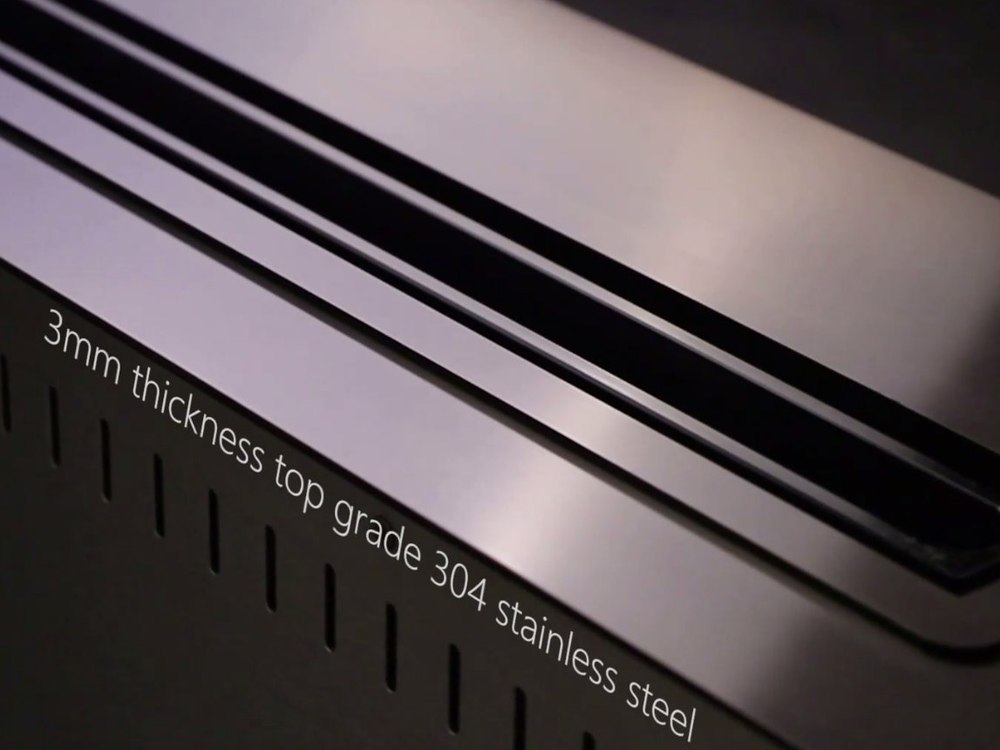
3 mm, grade 304
Every panel is 3 mm grade 304 stainless steel. In silver it is left in its original brushed grain; the other colours are electroplated onto that same panel, so the finish is bonded metal rather than a film that can lift. Thick enough that the edges stay crisp — and it is why a biofuel fireplace insert still reads as metal after years of heat.
-
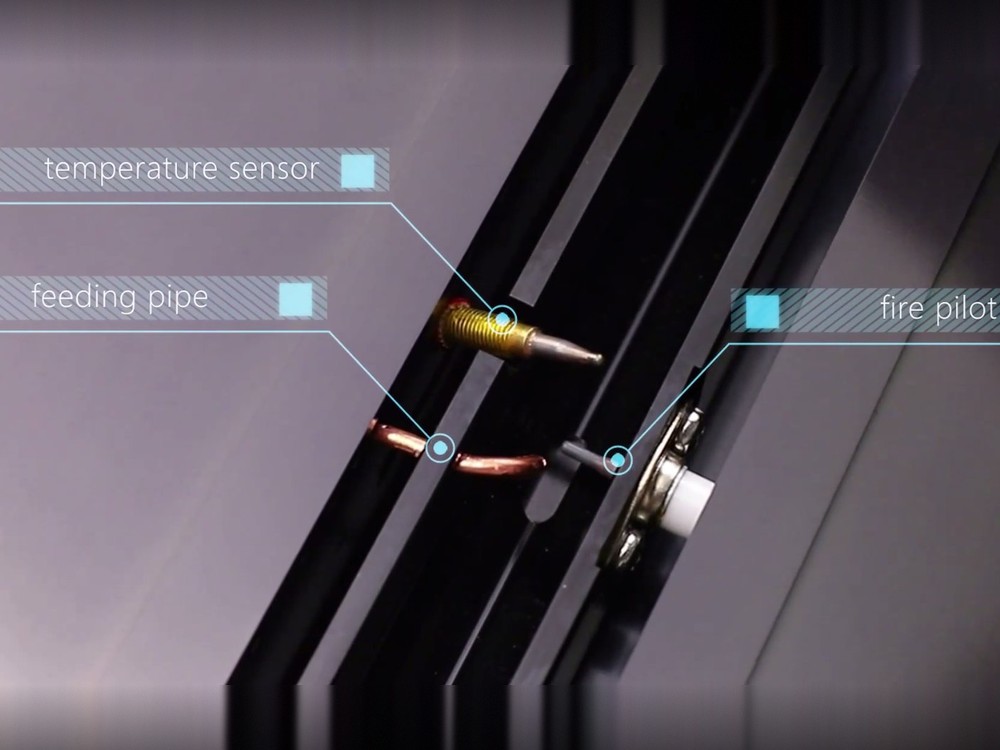
Three parts, one spark
A fire pilot sparks, the temperature sensor confirms that a flame is really there, and the feed pipe releases fuel only once it does. If the sensor reads cold, the line closes — the burner will not keep feeding a flame that failed to light. Every bio ethanol burner we build works this way: the sensor, not the user, decides whether the flame stays lit.
-
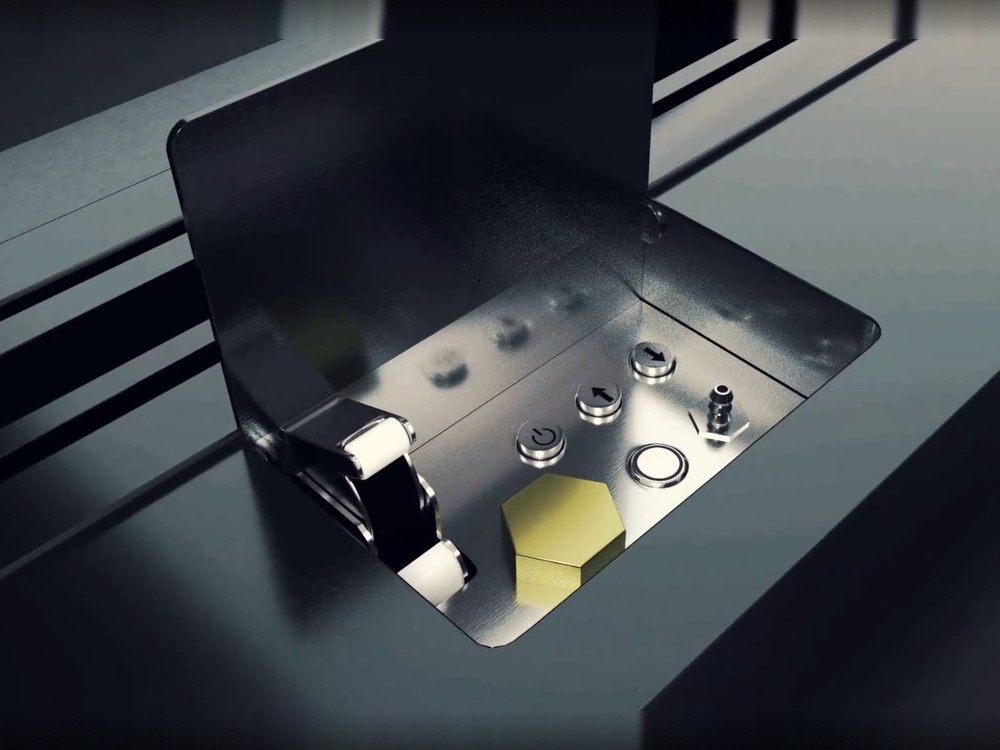
Three buttons, no menu
Power, up, down — that is the whole interface. Two presses light it, then step through five levels. The plate hides under a flip-up lid, and the same three buttons sit on the handset, so nothing has to be learned twice.
-
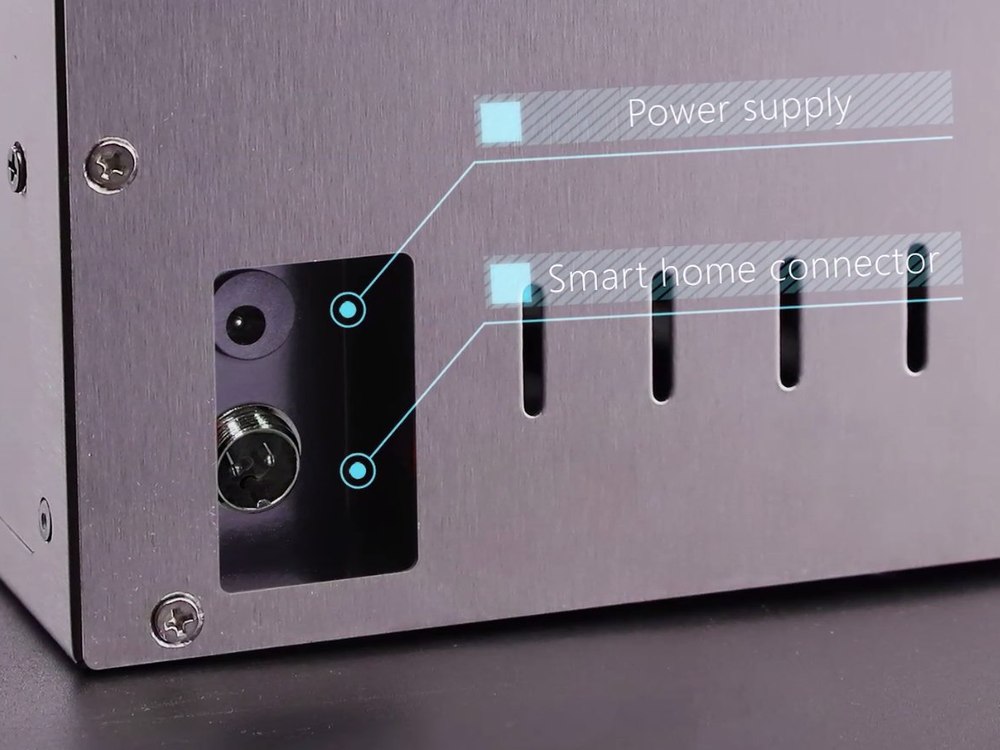
Smart home ready
Power arrives through a recessed inlet; a dry-contact connector beside it hands control to a wall switch, a relay or a home automation system. Both sit sunk into the steel, away from the flame and out of the way of a sleeve. That is what turns an indoor bioethanol fireplace into one more scene in the room, rather than a second remote to hunt for.

Eight protections. Five sensors. One flame.
The burner watches itself. Temperature, fuel level, over-heating, tilt and CO₂ are read continuously while the automatic feed keeps the flame at the height you set — and closes the fuel line the moment something reads wrong. It is the part that lets a modern ethanol fireplace run in a room with no flue, no damper and no chimney sweep.
- 01Temperature sensor
- 02Fuel level sensor
- 03Over-heating sensor
- 04Anti-tilt sensor
- 05CO₂ sensor
- 06Auto filling
- 07Auto feeding
- 08Auto ignition
Fits a 1210 mm opening.
Nothing behind it but a socket.
Cut the opening, line it with a non-combustible surround, leave a grounded 110/240 V outlet inside the cavity — an ethanol fireplace indoor installation needs nothing else in the wall. There is no flue, no chimney and no clearance to combustible framing beyond the figures below.
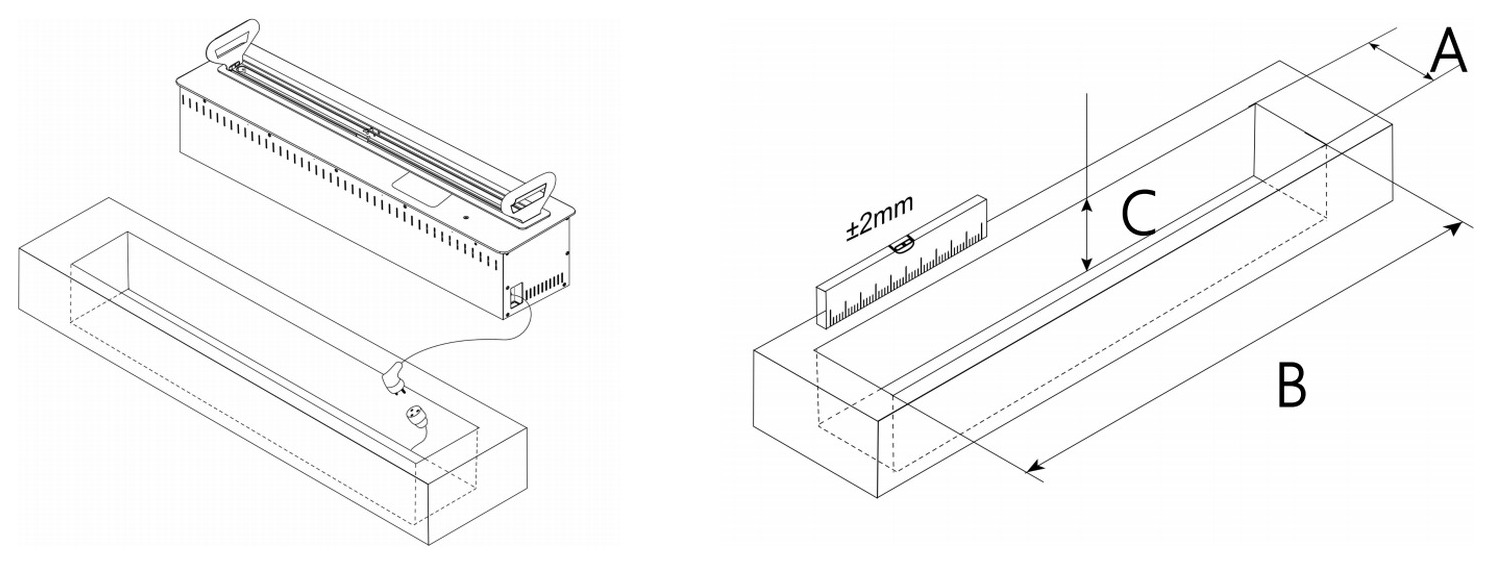
| A | B | C | |
|---|---|---|---|
| inch | 7-1/5″ | 47-3/5″ | 9-4/5″ |
| mm | 183 | 1210 | 250 |
- For correct operation of the smart fireplace, the unit must sit 100% horizontal — check it with a spirit level before the surround is closed.
- A live, grounded (earth) socket is required inside the wall, positioned bottom right and ideally below the level of the tank.

| A | B | C | |
|---|---|---|---|
| inch | 15″ | 55-1/2″ | 20″ |
| mm | 383 | 1410 | 508 |
Fire surround material recommended: a heat-resistant material that withstands min. 150 °C. Non-flammable options: bricks, tiles, stone, steel.
Smart Control
The SR-48 speaks the language of the room it sits in. Tuya and Smart Life, Apple HomeKit, Google Home, Amazon Alexa and SHS connect over Wi-Fi and the cloud — so lighting the flame is one tap, or one sentence, away.
Where the building is wired, the burner also exposes RS-485, RS-232 and dry-contact interfaces, with an optional Zigbee bridge. That is how KNX, Crestron, Control4, Lutron, Savant, RTI, Z-Wave, Modbus, M-BUS and Taphome bring it into the same scene as the lights and the blinds — a bio fireplace that answers to the room, not to a separate remote.

Ethanol burner insert — many options
Can be installed in various arrangement options — single-sided, three-sided, double-sided, island, corner and room divider — because the same bioethanol burner insert is re-chambered for each one.
-
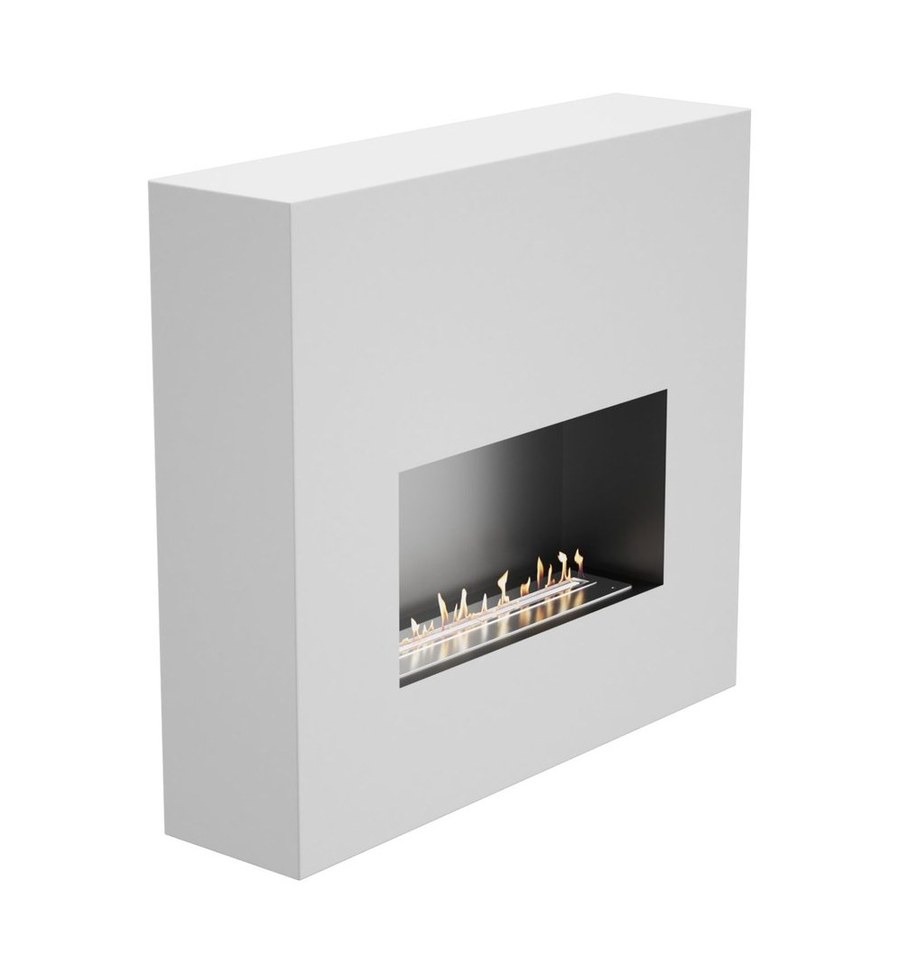
Single-sided -
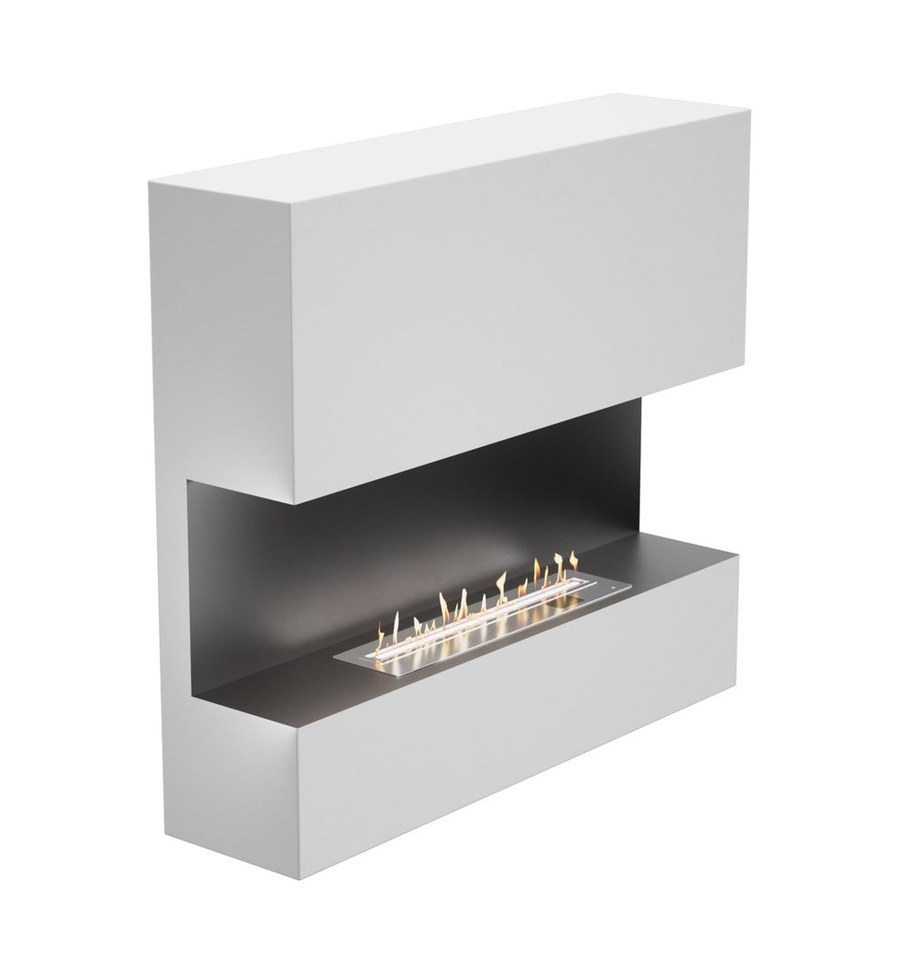
Three sided -
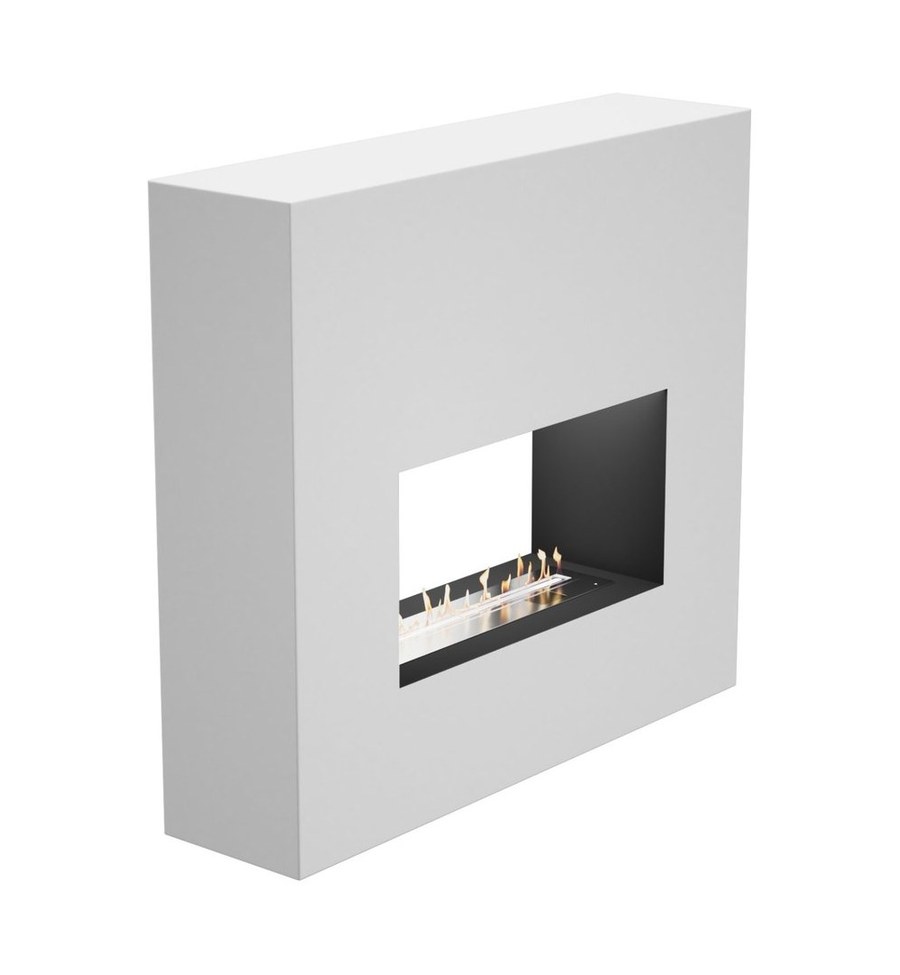
Double sided -
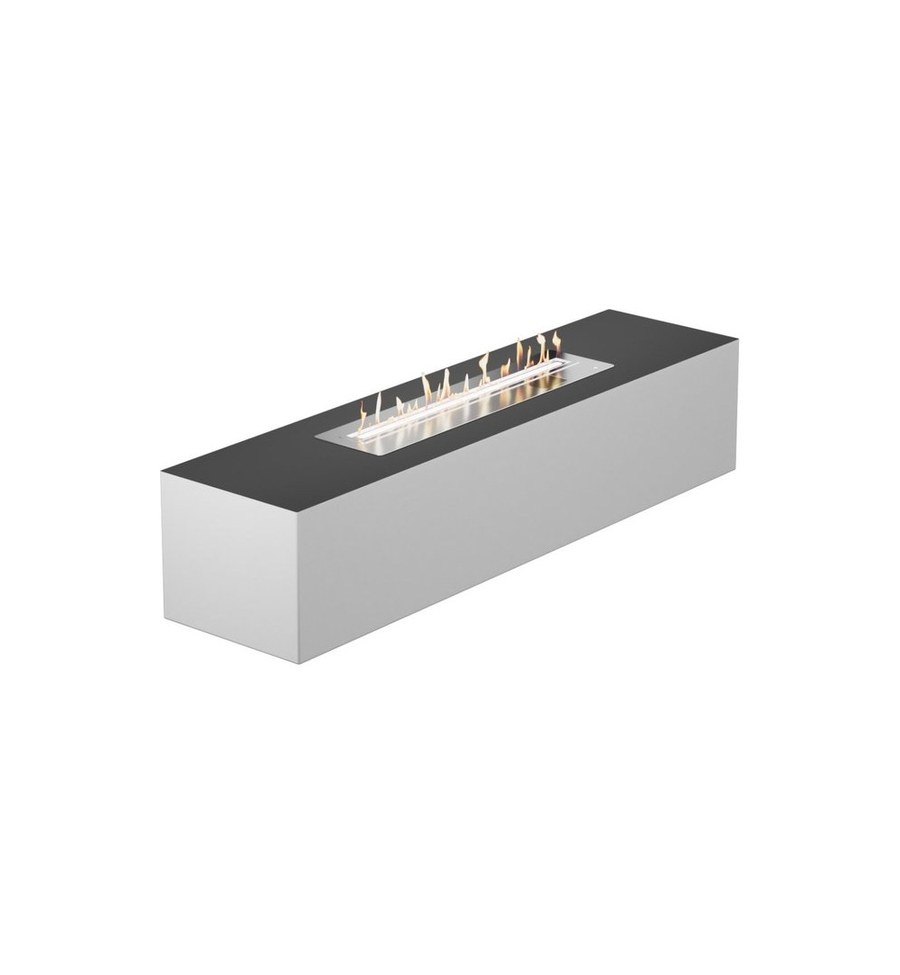
Island -
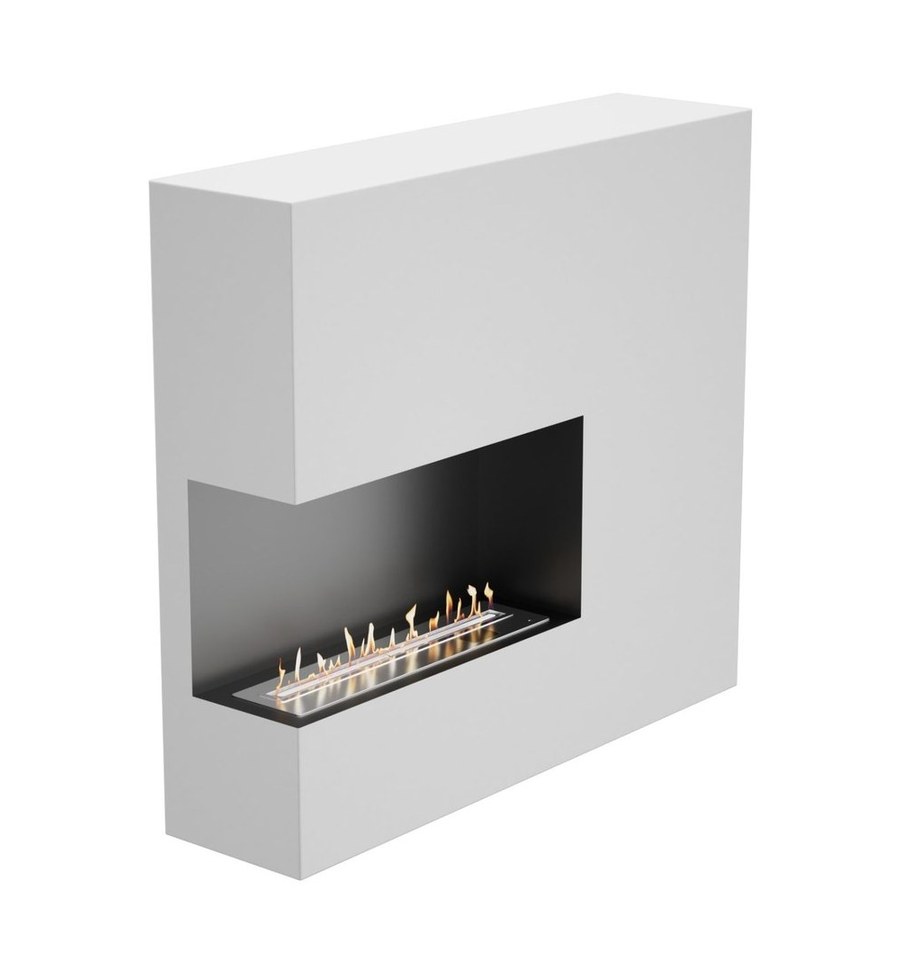
Left / right corner -
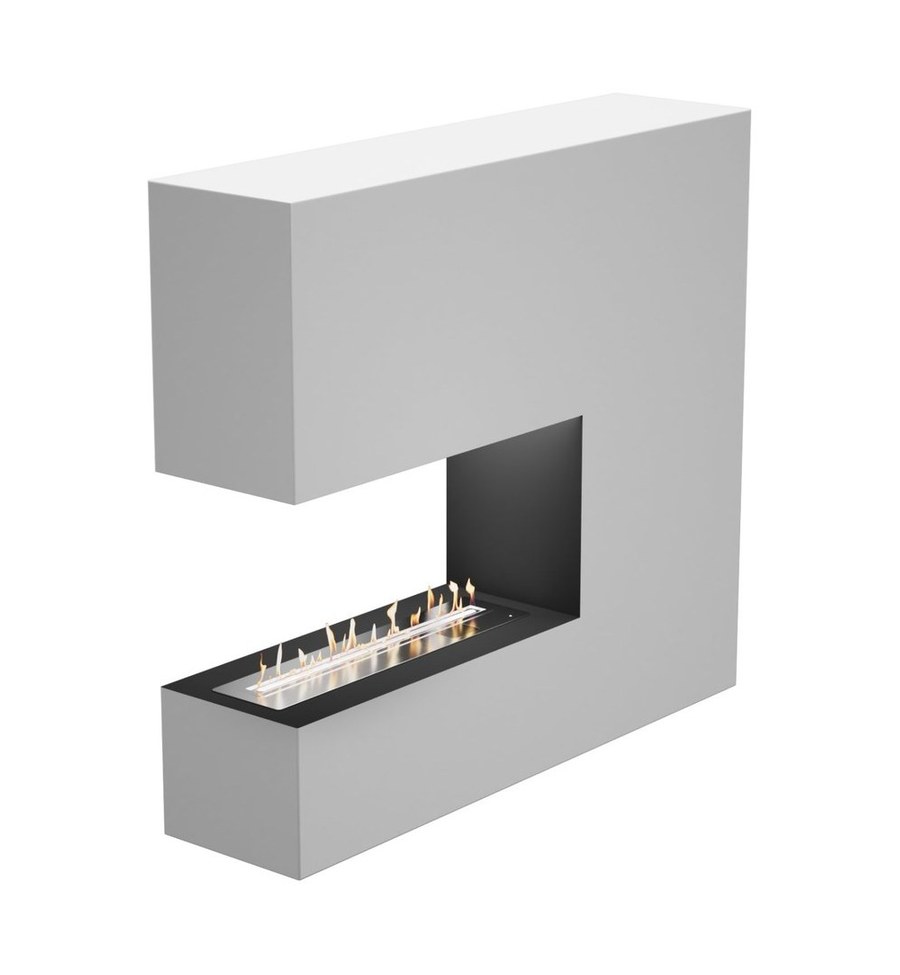
Room divider
Every arrangement is quoted per opening: send a sketch and we return the option that fits, with the firebox depth it needs. Most biofuel insert fireplaces in our order book are three-sided or island builds; a double-sided biofuel fireplace is the usual answer where the flame has to face two rooms, and a single-sided biofuel indoor fireplace is the simplest retrofit into an existing wall. Because the chamber is the same across the range, a bio ethanol insert fireplace, a pair of biofuel indoor fires in a restaurant, or a single burner in a long feature wall all start from one set of drawings.
Questions, answered
Documents, refuelling, heat and mixed loads — what a project buyer asks first.
01 What sales materials can you provide?
Photos and video of the unit running, the user manual, the installation guide, the technical spec sheet, the CE and UL documents, a 3D PDF and the 2D DWG for this model — all of them downloadable from this page.
A printed finish card and physical colour samples can be couriered for a project; ask your contact to include them with the quotation.
02 How do I refuel safely?
The burner draws from a can through a suction hose, so refuelling means swapping the can rather than pouring into the tray. Switch off, let the chamber cool — ten minutes is enough — pull the hose, seal the empty can, fit the full one, and wipe any spill before restarting.
Never refuel a burner that is running or still warm, never fill past the shoulder of the can, and keep the fuel container away from the opening while you work.
03 How does it differ from a gas or electric fireplace?
Against gas: no flue, no chimney, no gas line and no annual service, which is what makes it possible in an apartment or a listed interior where a flue cannot be added. Against electric: a real flame with real radiant heat, rather than a light-and-mist effect.
The trade-offs are honest — you swap a can of fuel instead of turning a valve, heat output is lower than a gas fire of the same width, and the unit needs a socket in the cavity.
04 How hot do the exterior surfaces get during use?
There is no glass in front of the burner — the flame sits in an open tray — so the parts that get hot are the steel around the opening and the tray lip, and they stay hot after the flame is out.
We have no tested exterior surface temperature to publish, so treat the surround as hot: keep the first 60 cm clear of anything that can burn or melt, and let the unit cool before you touch or clean it. A heat shield or a deeper mantel above the opening solves most of it.
05 Can I mix different models in one order or container?
One container can carry any mix of lengths and finishes — an 18 inch for a yacht and a 96 inch for a lobby in the same shipment.
There is no per-model minimum beyond the one-piece MOQ, and the crates stack, so a mixed load does not waste volume.
06 Can the fireplace be installed in a wall, a TV cabinet, or a cabinet insert?
Yes, into a stud wall, a plasterboard reveal or a joinery unit — provided the material in contact with the chamber is non-combustible and the clearances are met.
What is not acceptable is an enclosed combustible cabinet: a timber carcass with the burner boxed into it has nowhere to put the heat. In joinery, line the opening with cement board or steel and leave the ventilation the drawing calls for.

Want it in your finish?
Send the opening dimensions, the surround material and the finish you have in mind. You get a section drawing, a finish sample list and a quotation — a bioethanol fire place is only ever as good as the opening it sits in, so the drawing comes first.